Sounds like you
“We bolted a chatbot onto the service and it made things worse.”
“Nobody can tell me which steps a machine should handle and which need a person.”
“Every customer complaint lands in a different department.”
“The software works. Things break when it hands off to a person.”
The problem
Most teams bolt a chatbot onto the service and call it AI.
The chatbot lands in one step and everything around it stays the same, so the handoffs break and customers end up calling anyway. The fix starts with one question at every step: should a machine handle this, or a person?
Who it is for
What you get
A map of the whole service, with every handoff decided.
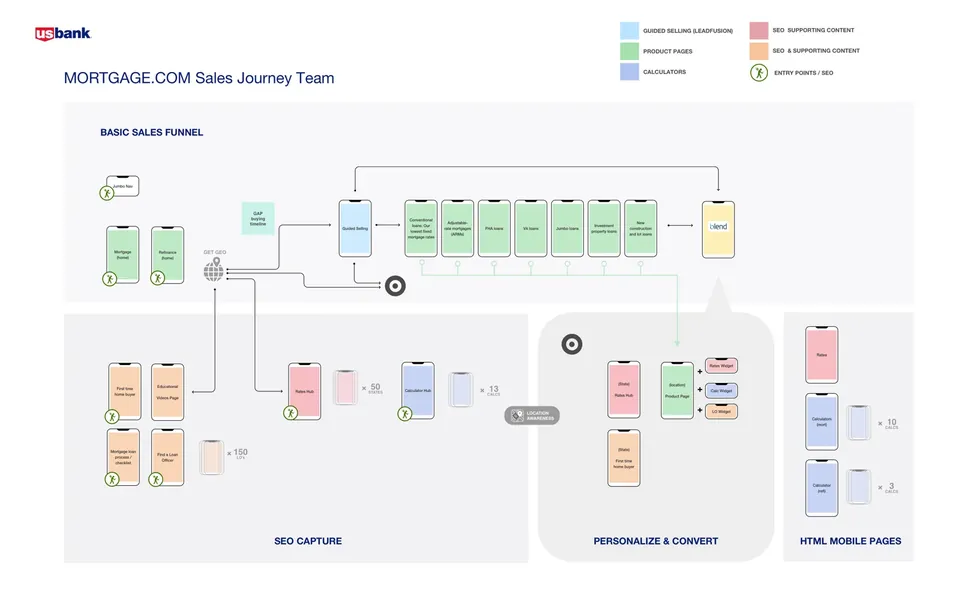
- Service blueprints. What the customer sees and what your staff does out of sight, mapped end to end.
- Person and machine handoffs. Each step marked: machine or person, and why.
- Journey maps with the bad days in them. The returns, the missed calls, the order that went to the wrong address.
- The physical side. The front door, the waiting room, the signs, and the route from the parking lot to the right desk.
- A plan someone can build. I build AI systems too, so the blueprint stays inside what the software can do.
Where I learned it
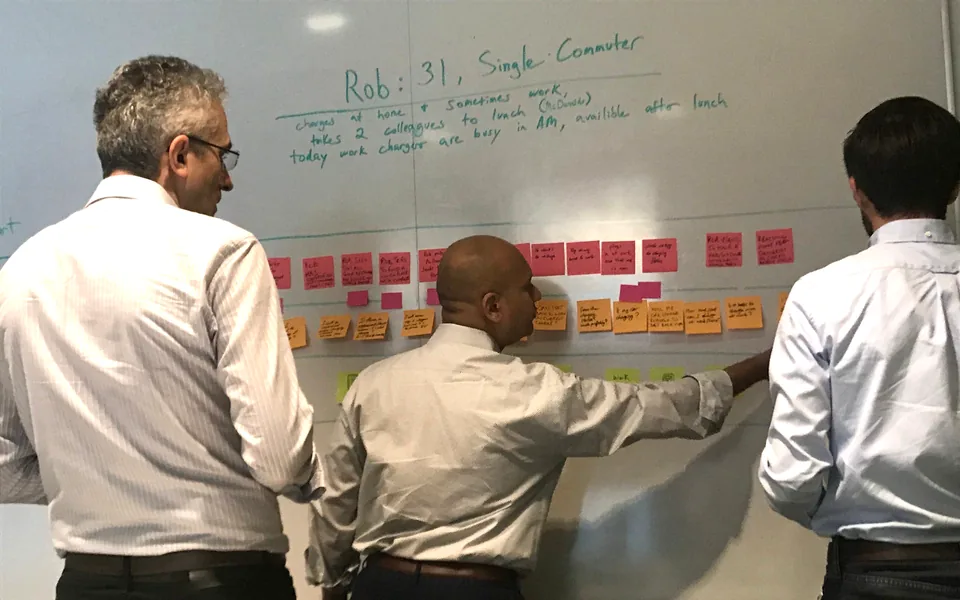
I teach service design, and I build the AI that runs under it. I trained in Cooper School's service-design program alongside BMW's UX org, then led the sessions that put it into practice there. Two features from one session changed the plan in Munich: the BMW case study.
A lot of it has been healthcare. Service design and UX research for Medtronic and Fairview Health Services, research-side UX with the University of Minnesota, and healthcare work for 3M on the agency side.
How it works
Frame the service
A 30-minute call to pick the service we map and what it has to do.
Blueprint the journey
Map the whole thing, front stage and back stage, end to end.
Decide the handoffs
Step by step, where a machine acts and where a person stays in it.
Connect it to the build
Tie the blueprint to the software underneath, so somebody can build it.
Questions
Is service design a workshop or a project?
What makes this different from a UX consultant?
Do you build the AI from the blueprint too?
Can service design be done remotely?
What do we get at the end?
Do you do patient experience work for clinics and hospitals?
Does a small business need a service blueprint?
Before you hire this, people ask
- How can a clinic improve patient experience?Map one patient visit from the first search to the last bill, with the staff who run it, and mark every wait, repeated question, and confusing moment. Fix the cheap ones first: the forms, the reminders, the signs, the phone tree. A one-day session that maps one visit type is $3,500.
- How do I fix wayfinding so people stop getting lost?Walk the route the way a first-time visitor does, starting from their phone before they leave home, and write down every place you would hesitate. Most wayfinding problems are fixed with better directions before arrival, one name used for each place everywhere, and signs at the points where people turn, not where it was easy to mount them.
- How much does a service design project cost?A service design workshop with me starts at $3,500 for a day in a room with your team. Two days with the workflow maps and a written plan is $6,500. A full project, where I deliver the blueprint and stay through the fixes, is quoted before we start, once I know how many customer journeys and teams are in it.
- What is a customer journey map, and how do I make one?A customer journey map is a picture of every step a customer takes with your business, from first hearing about you to paying and coming back, with what they do, think, and feel at each step. You make one by walking a real customer's path with the people who serve them, and marking where things go wrong. The useful part is the list of fixes it produces.
- What is service design, and does my business need it?Service design is mapping how a customer moves through your business, front to back, including the parts they never see, and then fixing the steps that leak money or patience. You need it when customers complain about things that are nobody's job, when you are launching something new, or when you are about to put AI in the middle of it.
- What is workflow mapping?Workflow mapping is drawing how one piece of work moves through your business, step by step, person by person, system by system, as it happens today. The map shows the hand-offs, the waiting, and the extra steps nobody planned. It is the cheapest way to find what to fix, and the step to take before buying software or building any AI.
- How do I test a business idea before spending money?Build the smallest version a real customer can react to, put it in front of ten of them, and watch what they do. A landing page, a clickable prototype, a sign-up form, or a one-month trial of a new sales channel usually costs a small fraction of the full build and tells you whether to keep going.
- How much does a UX consultant cost?With me, a review or second opinion is $150 an hour and a one-day working session with your team is $3,500. A senior UX lead on the team for a while is $3,500 a month for about two days a month, $6,500 for about a day a week, or $11,000 for about two days a week. A single usability study is a fixed price quoted before it starts. Most small businesses should start with the hour.
Tell me what your customers complain about most.
We start the map there.